Episode 67 – A Conversation with a Theist

In this episode of the Secular Hubcast we take a deep dive into the mind of a theist. Our special guest Nathan Spears discusses his problems with the scientific world view and attempts to demonstrate how science falls short in its search for truth, reality and consciousness. This is the first part in a multi-part conversation where we hit on a variety of topics. In this episode we focus on the short comings of science as it pertains to our world view, human’s place in the world and morality.

HOST, EDITOR:  Paul Schilling

Logo Design: Terry Kirkham

The views and opinions expressed are those of their respective authors and do not necessarily reflect the official policy or position of the Secular Hub.
***
The Secular HubCast: The Voice of Denver’s Secular Hub.
Become a member of the Secular Hub today!
Subscribe to our YouTube Channel
Follow the Secular Hub on Facebook
Follow the Secular Hub on Twitter: @SecularHub
Music: A Himitsu – Adventures (unedited, used under Creative Commons License)


Episode 36 – Thinking About Thinking

We are all thinking all the time.  With some of us it might not always appears so, but our minds are running constantly.  Opinions, beliefs, evidence,  facts; all these elements combine and form in our minds.

Critical thought is a manner of thinking that will lead to greater and more factual understanding of the universe.  It relies on measurements and evidence and avoiding problems in thinking to reveal truths and separate them from falsehoods.

But truth is an ongoing process.  Truth is always tentative.  In this discussion Jesse and Paul get into the complexity of it all to break it down and simplify it.

In this episode we rely pretty heavily on a piece of writing called “A Field Guide to Critical Thinking” by James Lett.  Check it out and let us know what we got wrong in this episode.

Hosts:  Jesse Gilbertson, Paul Schilling

Editor: Jesse Gilbertson

Thanks to Robin for help with announcements

Logo Design: Terry Kirkham

The views and opinions expressed are those of their respective authors and do not necessarily reflect the official policy or position of the Secular Hub.
***
The Secular HubCast: The Voice of Denver’s Secular Hub.
Become a member of the Secular Hub today!
Subscribe to our YouTube Channel
Follow the Secular Hub on Facebook
Follow the Secular Hub on Twitter: @SecularHub
Music: A Himitsu – Adventures (unedited, used under Creative Commons License)

Happy Birthday Mister Darwin!

Charles Robert Darwin was born 210 years ago today, which seems like a long time to most humans.  That time is about a microsecond in the geologic time scale (GTS) that expresses the history of our planet.  Would Darwin be impressed by how far our understanding of life has evolved?

Darwin's Tree of evolutionIn 1837, Darwin wrote in his notes (see image) “I think case must be that one generation should have as many living as now. To do this and to have as many species in same genus (as is) requires extinction . Thus between A + B the immense gap of relation. C + B the finest gradation. B+D rather greater distinction. Thus genera would be formed. Bearing relation” (next page begins) “to ancient types with several extinct forms.”

To be fair, it is likely this thought had occurred to other people before this time, but were never published.  It took Darwin, twenty-two years to gather evidence and develop the idea and the courage to publish his most famous work On the Origin of Species by Means of Natural Selection, or the Preservation of Favoured Races in the Struggle for Life published on November 22, 1859.  In 1844, Darwin wrote to Joseph Dalton Hooker, “At last gleams of light have come, & I am almost convinced (quite contrary to opinion I started with) that species are not (it is like confessing a murder) immutable. Heaven forfend me from Lamarck nonsense of a “tendency to progression” “adaptations from the slow willing of animals…”

Darwin opened up a can of worms or should I say bacteria with his theory which is still being debated today.  Although the debate today is much different than in Darwin’s time.  So like life, knowledge evolves as well.  The tree of life looks much different than Darwin’s first drawing.

Modern tree of lifeWhat strikes me about this modern version of the tree of life is the dominance of bacteria. Bacteria are colored blue, eukaryotes red, and archaea green.  This shows the diversity in bacteria, it does not indicate the abundance of bacteria on earth where the biomass has been estimated to be greater that all plants and animals combined.  Another interesting fact about bacteria is they evolve at a rate that is observable in a short time-frame.  The video below shows bacteria evolving antibiotic resistance in a matter of days.

So the debate continues with many theories on how life evolves, but that is what science is all about, testing theories to find what is the best explanation of reality.

At the end of On the Origin of Species Darwin concluded that:

There is grandeur in this view of life, with its several powers, having been originally breathed into a few forms or into one; and that, whilst this planet has gone cycling on according to the fixed law of gravity, from so simple a beginning endless forms most beautiful and most wonderful have been, and are being, evolved.

“Evolved” in the quote above was the only mention of evolution in the first 5 editions of his book.  He finally added the word “evolution” to the sixth edition of his The Origin of Species in 1872 also removing “On” from the title.

Happy birthday to Charles Darwin and the Secular Hub (6 years old).

For more information see Wikipedia’s Portal:Evolutionary biology.

Truth isn’t Truth! Or is it?

Recently  Rudy Giuliani made the statement “truth isn’t truth” in an interview on Meet the Press. So how do we know what is true?  Learning how to think critically can help you get closer to the truth.  Exploring how you think and developing the skill of thinking critically can help cut through the hype of advertisers and politicians.

Critical thinking is disciplined thinking that is clear, rational, open-minded, and informed by evidence. It is a skill that can be learned and  needs to be studied and practiced to improve our thinking.

Brief History

Socrates lived in approximately 470 – 399 BC in Athens. He is regarded as the father of critical thinking for his development of the Socratic Method, a form of cooperative argumentative dialogue between individuals, based on asking and answering questions to stimulate critical thinking and to draw out ideas and underlying presumptions.

Rene Descartes lived (1596 – 1650) in France and the Dutch Republic. He was one of the notable intellectuals of the Dutch Golden Age. Descartes began a treatise about 1628, entitled Rules for the Direction of the Mind that was unpublished at the time of his death. A Dutch translation appeared in 1684. The first 12 rules deal with his proposed scientific methodology in general.  Analysts consider them to be early versions of principles that he expanded upon in his later writings.  His best known philosophical statement is “I think, therefore I am” (French: Je pense, donc je suis; Latin: Ego cogito, ergo sum), found in Discourse on the Method (1637) is a fundamental element of Western Philosophy. Descartes created the foundation for 17th Century rationalism. “Rationalism, in Western philosophy, the view that regards reason as the chief source and test of knowledge.”

John Dewey (1859 – 1952) was an American philosopher, psychologist, and educational reformer who recognized that a curriculum aimed at building thinking skills would benefit the individual learner, the community, and the entire democracy. Dewey’s ideas on education were to prepare students as “reflective, autonomous and ethical beings capable of arriving at social truths through critical and intersubjective discourse” opposed to “docile compliance with authoritarian work and political structures, discourage the pursuit of individual and communal inquiry, and perceive higher learning as a monopoly of the institution of education.” As an atheist and a secular humanist in his later life, Dewey was one of the original 34 signatories of the first Humanist Manifesto (1933).

The Process

There are about 175 cognitive biases are identified in the preceding graphic created from Wikipedia’s List of cognitive biases article. Buster Benson divided the Wikipedia list into four main issues:
1. Too Much Information
2. Not Enough Meaning
3. Need To Act Fast
4. What Should We Remember?

We need to mitigate cognitive biases to try to reduce their negative effects on our thinking.  In addition, the basic steps of critical thinking are:
1. Organize information
2. Structure reasoning
3. Consider evidence
4. Identify assumptions
5. Evaluate arguments
6. Communicate conclusion

More Resources

In addition to the links above, the following resources are just suggestions (not endorsements) of where to get more information about and of critical thinking.  If you find any other resources, use our contact page to send me a link.

Books that I have found about critical thinking.  I have not read all of them cover to cover, but used all of them in my research. I also provide links to search the WorldCat to find the books at your local library and Amazon.com to purchase the book.  The Amazon.com link is associated with the Secular Hub and if you purchase using that link, the Secular Hub will receive 4.5% of the selling price from Amazon.

  • Critical Thinking Skills For Dummies by Martin Cohen  WorldCat  Amazon
  • A Field Guide To Lies by Daniel J. Levitin  WorldCat  Amazon
  • Six Thinking Hats by Edward De Bono  WorldCat   Amazon
  • Thinking, Fast And Slow by Daniel Kahneman  WorldCat  Amazon
  • How To Solve It by G. Polya  WorldCat  Amazon
  • Nudge: Improving Decisions About Health, Wealth, and Happiness by Richard H. Thaler and Cass R. Sunstein  WorldCat  Amazon
  • Skeptic: Viewing the World with a Rational Eye by Michael Shermer  WorldCat  Amazon

Episode 16 – Evidence Based People

On the 14th of April, 2018 marchers once again assembled to take a stand and speak out at this historic moment.  In Denver, the very heart of the city was taken over by marchers and demonstrators. 

The message was clear, “We want our leaders to take an evidence-based approach to policy and our world”.

Mike Baumeester and podcast newcomer AJ participated in the march and conducted during-the-march interviews, and Mike even stuck around the Secular Hub’s volunteer tent to put in even more volunteer hours.

Because this episode was recorded during a march and inside Denver’s beautiful Civic Center Park the noise and energy of the event can be heard in the background as well as in the diverse voices of those.

Recorded April 14, 2018.

Topics covered in this episode, for further consideration:

March For Science Denver  or visit the national organization March for Science

Oasis community in Salt Lake City, you say?  Why yes, indeed.  Check out their upcoming events

Where exactly does Brigham Young U fall in the nation’s colleges and universities least friendly to LGBTQ rights?

Speaking of things unfriendly to LGBTQ, conversion therapy is still practiced in many areas.  The bill in Colorado to prevent its application to minors has been stopped for the 2018 legislative session.  As usual.  Let’s all keep up pressure on our elected officials to do the right thing.  Find your own representatives here

The Secular Hubcast:  the Voice of Denver’s Secular Hub

Become a member of the Secular Hub today

Follow the Secular Hub on Facebook and Twitter

Learn more about the American Humanist Association

Music: A Himitsu – Adventures

Host(s): Mike Baumeester, AJ

Earth the First Frontier

Earth, third rock from the Sun, our home for at least a few million or billion years (depending on when you start the clock) and the next 4 or 5 billion years…I hope. The Earth was our first universe until we realized there was more out there and here on Earth.

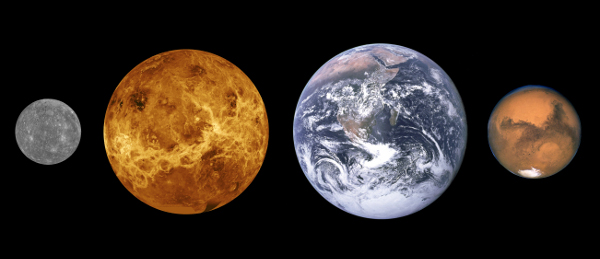
Terrestrial planets image
Relative sizes of Mercury, Venus, Earth, and Mars

Earth’s axis of rotation is tilted with respect to its orbital plane, producing seasons on the Earth. The gravitational interaction between the Earth and relatively large Moon causes ocean tides and stabilizes the Earth’s orientation on its axis. Earth is the densest planet in the Solar System and the largest of the four terrestrial planets.

Earth’s interior remains active and hot with a solid iron inner core (5,400 °C), a  molten liquid outer core (2,730–4,230 °C) that generates a magnetic field that extends far out into space. The Earth’s magnetic field serves to deflect most of the solar wind, whose charged particles would otherwise strip away the ozone layer that protects the Earth from harmful ultraviolet radiation.  Combined with all the water and atmosphere, it makes Earth a relatively comfortable and safe place for life to evolve.

Apollo 17 view of Earth

Life began in the ocean over 3.5 billion years ago and evolved into the complex tree of life we see today.  In 2016, researchers estimated that there might be 1 trillion species currently on Earth with only one thousandth of 1 percent (0.001%) identified/classified by us.  This is up from 10-14 million estimated in 2012.  Those numbers do not account for all the species that have already disappeared from the Earth.  Some estimates are 99% of all species that ever lived on Earth are extinct, but that is very difficult to verify.

There is only ONE global ocean covering approximately 71% of Earth’s surface and 90% of the Earth’s biosphere. The global ocean has been geographically divided into distinct named regions. The boundaries between these regions have evolved over time for a variety of historical, cultural, geographical, and scientific reasons.  Most of the ocean is unexplored — about 95 percent of this underwater realm is unseen by human eyes.  The world ocean is the habitat of 230,000 known species, but because much of it is unexplored, the number of species that exist in the ocean is much larger.

Out of sight does not mean we (humans) do not have a huge impact on the ocean.  The ocean is a vast source of food, but we are depleting the fish stocks with modern fishing methods.  We dump our waste into the ocean, thinking it will disappear.  Since 1996, NOAA has removed 904 tons of debris from Papahānaumokuākea Marine National Monument in Hawaii including 57 tons from a 2014 mission.

Over 7.6 billion humans live on Earth and depend on its biosphere and natural resources for their survival.  We must learn how to care for this ecosystem before we try to create an artificial one on another planet, otherwise we will be doomed anywhere else and on Earth.

Sources and more about the Earth:

https://en.wikipedia.org/wiki/Earth
http://www.noaa.gov/oceans-coasts
https://en.wikipedia.org/wiki/Ocean
http://tolweb.org/tree/phylogeny.html
Tree of Life Explorer at http://www.onezoom.org/
https://visibleearth.nasa.gov/view_cat.php?categoryID=1484
https://en.wikipedia.org/wiki/Extinction